11.2 is not just a number. It is the boundary between "100% juice" and "nectar". Between profit and a fine. Between an honest product and a counterfeit.
This number is relevant for reconstituted orange juice and is called degrees Brix. And behind it lies a surprisingly deep physics — and a very concrete economics.
Where the Brix scale came from, who Karl Balling was, and why 1°Bx is strictly 1 gram of sucrose per 100 grams of solution. A history of measuring sugar in liquids, from 19th-century winemaking to modern standards.
Chapter 2. What Juice Really Is
Fruit concentrate is not water with sugar. We break down the composition of real juice: sugars, acids, pectins, flavonoids. Why Brix measures not sugar but the total amount of soluble solids (TSS) — and how this affects work with concentrate.
Chapter 3. Light Slows Down — and This Can Be Measured
The physics of the refractometer in plain language: why light changes speed in different media, what the refractive index is, and how the instrument converts the angle of a light beam into degrees Brix.
Chapter 4. Three Pitfalls of the Refractometer
Temperature error, acid correction and sample turbidity — three reasons why the refractometer lies. How each of them causes production losses and how to avoid them.
Chapter 5. Why High Brix Does Not Equal "Tasty"
Brix does not measure sweetness — it measures soluble solids. Why pomegranate juice with a Brix of 16° can be astringent and undrinkable. What the sugar-acid ratio is and why it matters more than a single number on the refractometer. A table of parameters for the main juices.
Chapter 6. How Brix Affects Concentrate Purchasing
Seasonality, logistics, AIJN standards — how these factors change the parameters of the same batch. Why "a drum at Brix 65°" without acidity, ratio and a quality passport is not reliable raw material.
Chapter 7. The Law Guards Juice — and How It Is Circumvented
How a shipment of adulterated juice with the correct Brix was detained. The isotope analysis method against corn syrup. CODEX, AIJN and EU Regulation 1308/2013 standards: what is allowed, what is prohibited, and where the boundary between juice and nectar lies.
Chapter 8. The Math That Saves Money
Formulas for reconstituting concentrate, calculating the concentration factor, converting mass to volume. The Pearson square for quickly calculating the blending of two batches. A worked example with lime concentrate: the cost of an error of 82 kg of water per 100 kg of raw material.
Chapter 9. Cherry as a Technological Quest
Why sour cherry is the most difficult raw material in the juice industry. Ohmic heating as a way to preserve anthocyanins. Why cherry juice is almost always blended with apple juice — and what comes of it.
In the 1850s, the Austrian scientist Adolf Brix worked on an applied problem: how to quickly determine how much sugar is dissolved in grape must? This was critically important to winemakers — the future strength of the wine depends on the sugar concentration.
Brix did not reinvent the wheel. Before him, the German chemist Karl Balling had created a similar scale for brewers. Brix improved it, recalculated the tables with greater accuracy and tied it to the reference temperature of 20°C. In the end, it was his name that stayed on the instruments.
Strict definition: 1°Bx = 1 gram of chemically pure sucrose, dissolved in 99 grams of deionized water, forming exactly 100 grams of solution at 20°C. The arithmetic is simple: 1 + 99 = 100.
Pure water — 0.00°Bx. A solution of 50 grams of sucrose and 50 grams of water — exactly 50.00°Bx.
A beautiful, precise system. But there is a nuance: from the standpoint of analytical chemistry, fruit juice is not water with sucrose but a fundamentally different medium with its own rules.
Fruit juice is not just "water with sugar" but a complex multi-component system that simultaneously contains:
Each component interacts with light in its own way. So when you measure the Brix of orange concentrate, the instrument does not say "there is this much sugar here". It says: "if this were a pure sucrose solution with the same refractive index as this liquid, it would contain this many percent of sucrose".
Brix is a convenient unit for measuring the total amount of soluble solids (by its international abbreviation — TSS, Total Soluble Solids). It sits at the center of any recipe, any concentrate supply contract, and any assessment of compliance with AIJN or CODEX standards.
In practice, this matters. Two batches of apple concentrate with the same Brix value of 70° can behave completely differently when reconstituted — because of differences in acidity, apple variety and evaporation regime. Concentrate from European autumn-harvest apples and the same product from Iran with formally identical Brix will require different corrections and yield a different sugar-acid ratio in the finished juice.
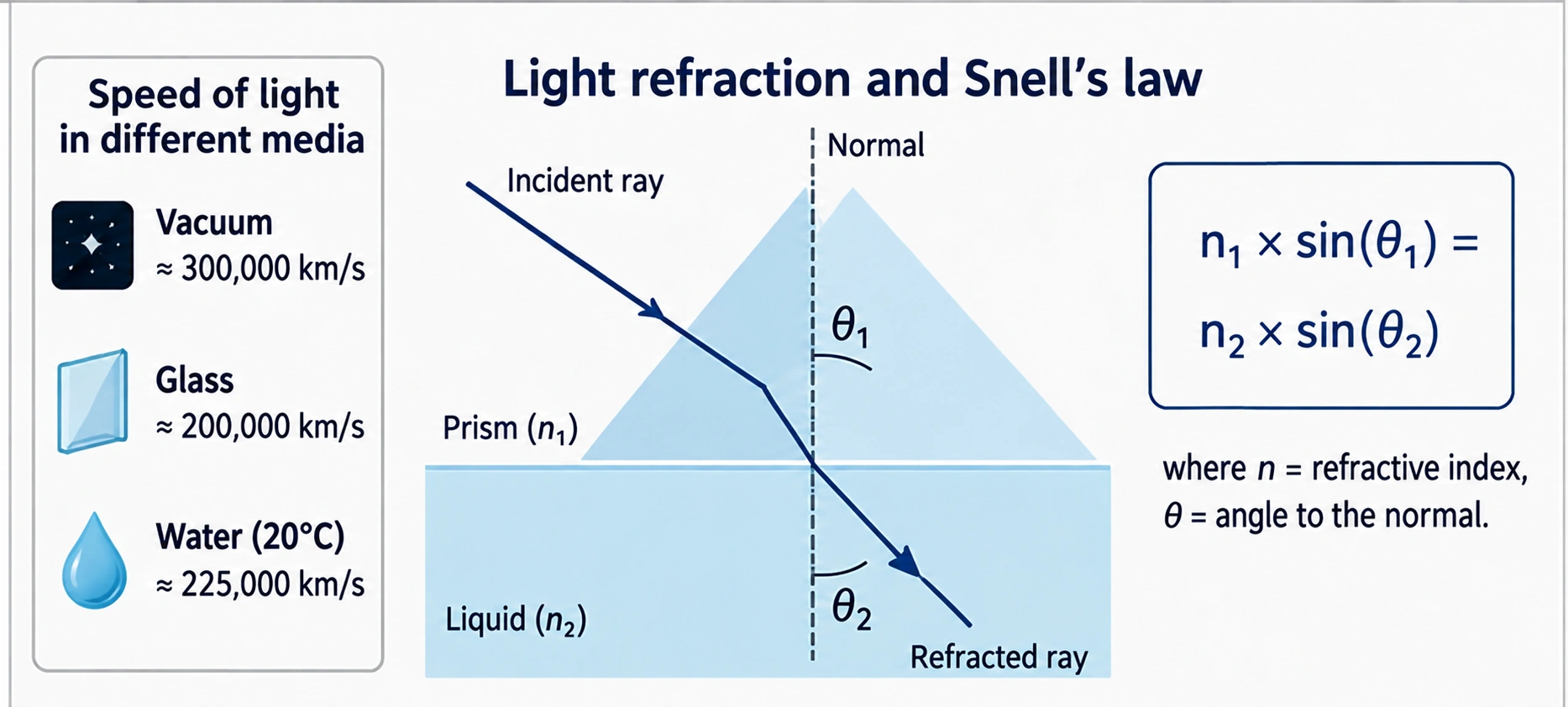
Fig. 1. Light refraction and Snell's law
To understand how the refractometer turns optics into chemistry, you need to recall one beautiful physical fact: light moves at different speeds in different media.
In a vacuum — about 300,000 km/s. In glass — about 200,000 km/s. In water — about 225,000 km/s. Why slower? Light continuously interacts with the molecules of the medium: the more of them there are, the more strongly it "slows down".
When a ray passes from one medium to another, it changes direction. That is why a straw in a glass of water looks "broken". This phenomenon is called refraction, and it is described by Snell's law (1621).
For water at 20°C the refractive index is n = 1.3330. Dissolve sugar — there will be more molecules, and n will increase. More sugar — a greater refraction angle. The relationship is exact and was tabulated back in the 19th century. This is what the refractometric method relies on.
The refractometer measures the critical angle — the angle at which light is completely reflected from the "prism — liquid" interface. Based on this angle, in accordance with the ICUMSA tables (International Commission for Uniform Methods of Sugar Analysis), the instrument calculates the "sucrose equivalent" of the liquid and gives a number in degrees Brix.
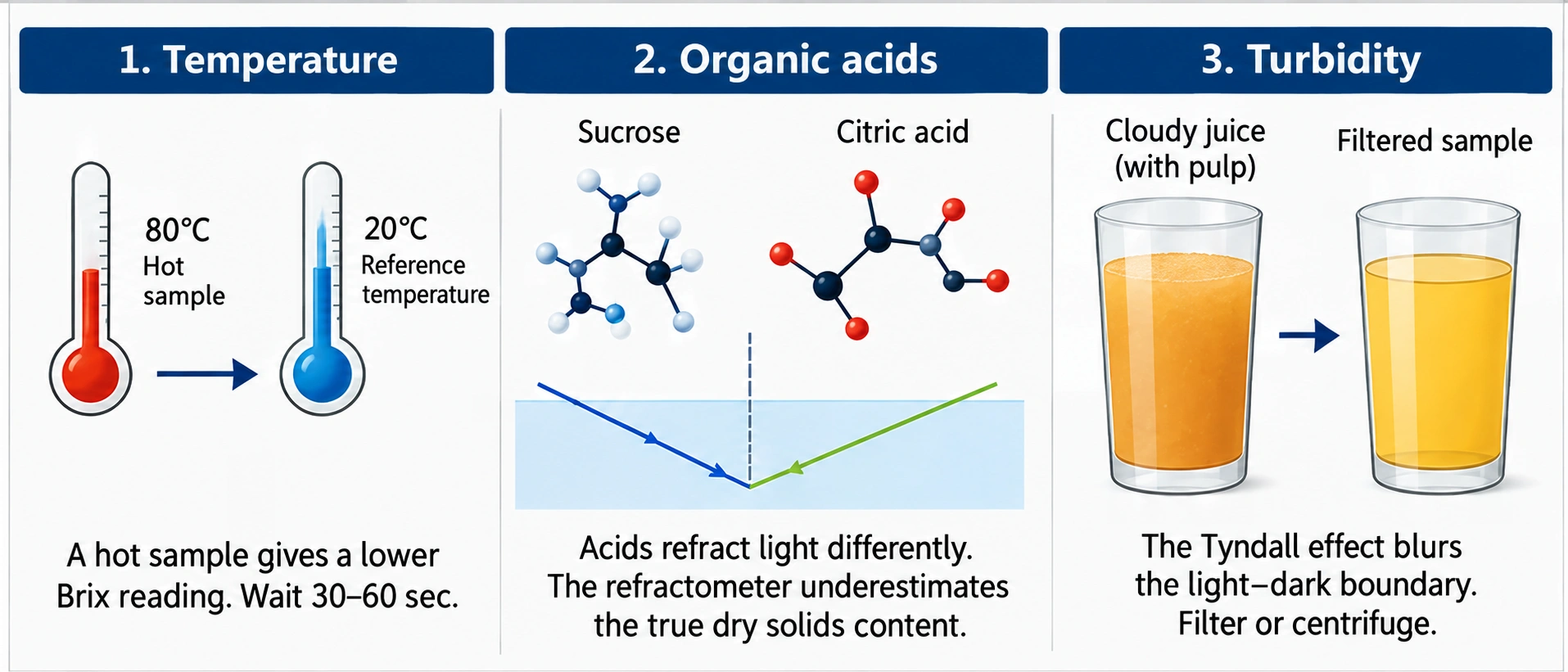
Fig. 2. Three pitfalls of the refractometer
When heated, the liquid expands, the molecules spread apart, the density drops, and the refractive index decreases. A hot sample will show an understated Brix compared with the same sample at 20°C.
Most refractometers are equipped with an automatic temperature compensation (ATC) system. In analog instruments this is a bimetallic plate; in digital ones, a thermistor with a software algorithm that recalculates to 20°C.
A critical mistake even experienced operators make: ATC compensates for the temperature of the instrument itself, not of the sample. If you take a sample of hot pasteurized juice at 80°C and immediately drop it onto the refractometer prism in a workshop at 22°C, the instrument will be wrong. It "thinks" the sample is also at 22°C.
The solution is elementary: wait 30–60 seconds. Two or three drops of liquid have negligible heat capacity — within a minute they equalize with the temperature of the instrument's metal body. Without this pause, the error can reach +0.5°Bx, which at production scale turns into thousands of liters of incorrectly diluted product every day.
Organic acids — citric, malic, tartaric — refract light differently from sucrose of the same weight. In a high-acid product the refractometer systematically understates the true content of soluble solids.
A real example: lime juice concentrate reads 47.0°Bx on the instrument. But laboratory acidity analysis taking into account the correction factor gives the true value — 53.52°Bx. The difference is 6.52 degrees.
If a technologist ignores this correction when reconstituting to the target 8.0°Bx, he will add too little water. The product will end up over-concentrated: expensive raw material is used more than necessary. In production practice this is called raw material overconsumption. One unaccounted degree at a plant with a capacity of several thousand tons a year means hundreds of thousands of euros in losses.
The correction factors are calculated using USDA/AOAC formulas and are compiled in the Kobe tables. For citrus fruits this is not a recommendation — it is a mandatory procedure.
Try measuring the Brix of freshly squeezed orange juice with pulp on an analog refractometer. You will see not a sharp light-shadow boundary but a blurred gray zone.
The reason is the Tyndall effect: pulp cells and colloidal pectins scatter light in all directions. The optical boundary blurs and the reading becomes unreliable.
The solution: before measurement, the sample is centrifuged or filtered through a membrane to obtain a clear "serum". Only this serum is applied to the prism.
A production nuance in incoming inspection: when receiving batches of mango, banana or peach purée this is especially relevant. Viscous purée-like systems with a high pectin content require mandatory preliminary centrifugation — otherwise incoming inspection data will be systematically wrong.
Use our calculator to precisely calculate the dilution ratios for bringing concentrate to the required Brix.
A persistent misconception is found in the professional community: high Brix = a sweet, high-quality product. That is not so.
Pomegranate juice can have a Brix above 15°Bx — and still be astringent because of its high tannin content. Aronia juice will give a similar picture. The point is that flavor perception is a multidimensional process: sweetness, acidity, bitterness and astringency activate different receptors that mutually suppress and amplify each other.
That is why the key quality parameter is not Brix by itself but the sugar-acid ratio — the ratio of corrected Brix to the percentage of acid.
| Product | Min. Brix (AIJN) | Sugar-acid ratio | Notes |
|---|---|---|---|
| Orange juice | 11.2°Bx | 15:1 – 20.5:1 | The global benchmark of flavor balance |
| Apple juice | 11.2°Bx | 65:1 – 170:1 | Low acidity, a "sweet base" for blends |
| Grape juice | 15.9°Bx | 20:1 – 40:1 | High natural Brix |
| Lime juice | 8.0°Bx | 3:1 – 6:1 | Acid correction is mandatory |
| Lemon juice | 8.0°Bx | 1:1 – 4:1 | Not suitable for single-fruit consumption |
| Sour cherry | 13.5°Bx | less than 5:1 | Always blended with apple |
| Pineapple juice | 12.8°Bx | 15:1 – 25:1 | Sensitive to enzymatic browning |
| Tomato juice | 5.0°Bx | — | Low Brix, calculated by a different method |
For top-grade orange juice under USDA standards, the sugar-acid ratio should be in the range from 15.0:1 to 20.5:1 at a minimum Brix of 11.8°Bx. Below 9.5:1, consumers perceive the product as unpleasantly sour.
Apple and grape juices are the opposite pole: low natural acidity with high sugar gives a ratio of 65:1 and above. That is why apple concentrate is a universal "sweet base" for blending: it neutralizes the excess acidity of cherry, lemon and lime and adds softness to any blend.
For beverage producers and concentrate importers, Brix is not only an analytical parameter but also a commercial variable.
Seasonality affects Brix and acidity. Orange concentrate from early harvests (October–November) usually has higher acidity and a somewhat lower sugar-acid ratio than mid-season product. The same supplier, the same country of origin — yet the juice parameters will be different. For recipe stability this must be taken into account with every incoming batch.
Logistics changes the parameters. During long sea shipments (for example, Brazil — Europe, three to four weeks in containers), the characteristics of the concentrate may change. Checking pH and acidity on receipt matters no less than Brix.
AIJN compliance is a negotiating argument. In international supplies, compliance with the AIJN reference guide (29 types of fruit) means the product meets the highest recommendations of the European producers' association. From such raw material you can reconstitute 100% juice — and that is a fundamentally different commercial position.
Explore our range of concentrated juices and purées right now.
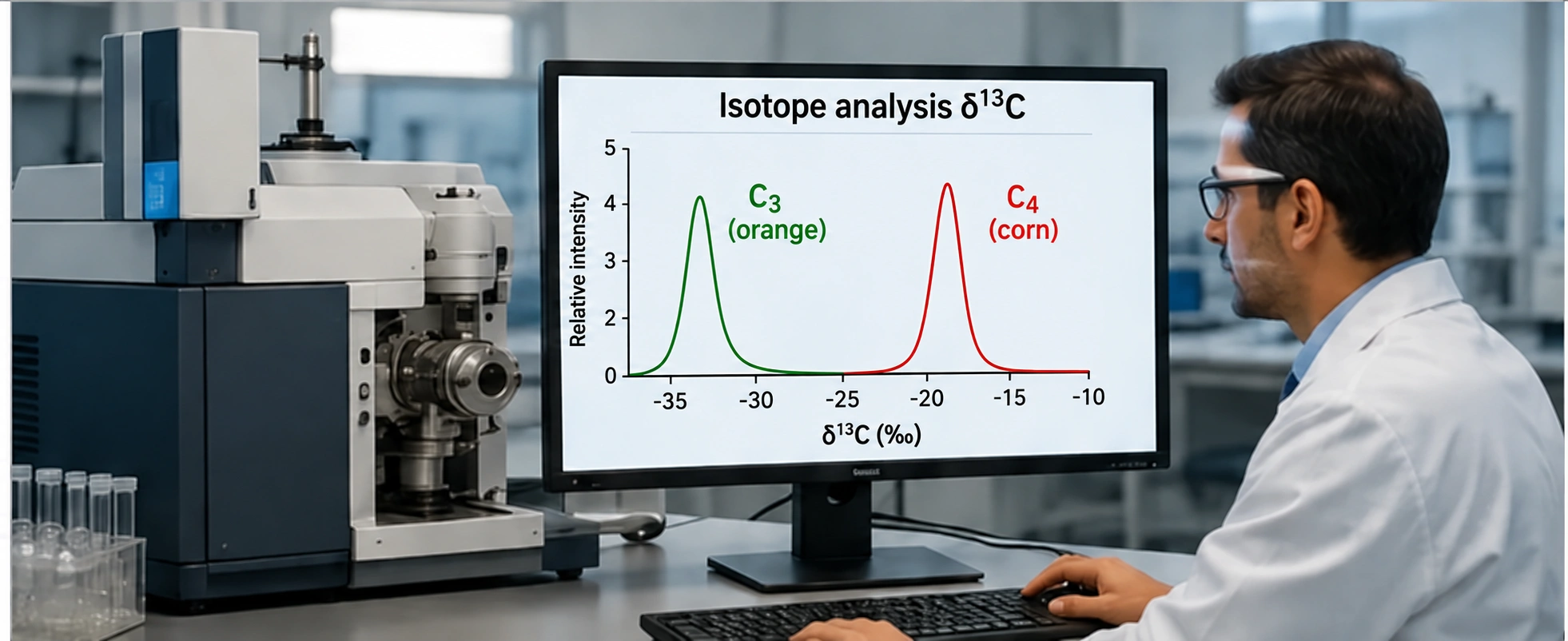
Fig. 3. Mass spectrometry and isotope analysis
In 2023, a shipment of "100% orange juice" was detained in one European market. The refractometer showed a correct 11.5°Bx. But isotope analysis revealed the substitution: about 15% of the sugars came from corn rather than from oranges.
How does this work? Corn is a C4 plant, the orange is C3. They assimilate carbon dioxide through different biochemical pathways, which creates a different isotopic "fingerprint" in the carbon atoms. A stable-isotope mass spectrometer sees this difference down to fractions of a percent. You cannot hide corn syrup behind a nice number on a refractometer.
CODEX Alimentarius (CXS 247-2005) — the global FAO/WHO framework: it prohibits adding extraneous sugars to 100% juices and sets minimum Brix values.
The AIJN reference guide — the guidance of the European producers' association, describing not only Brix but also the amino acid, mineral and isotope profiles for 29 types of fruit. For example, to confirm the authenticity of pomegranate juice, the amino acid L-asparagine is used as a biochemical marker — its profile is extremely difficult to reproduce artificially without complex chemical correction.
EU Regulation 1308/2013 — EU Regulation 1308/2013 on fruit and vegetable juice products. The European framework that defines minimum quality standards and labeling requirements.
Diluting concentrate below the minimum Brix under AIJN or EU Regulation 1308/2013 means automatically losing the right to call the product "100% juice". It moves into the category of nectar or a juice-containing drink.
| Fruit | Minimum Brix | Minimum juice content in nectar |
|---|---|---|
| Apple | 11.2°Bx | 50% |
| Orange | 11.2°Bx | 50% |
| Grape | 15.9°Bx | 50% |
| Pineapple | 12.8°Bx | 50% |
| Lime | 8.0°Bx | 25% |
| Lemon | 8.0°Bx | 25% |
| Sour cherry | 13.5°Bx | 25% |
| Mango | 15.0°Bx | 25% |
| Cranberry | 7.5°Bx | 30% |
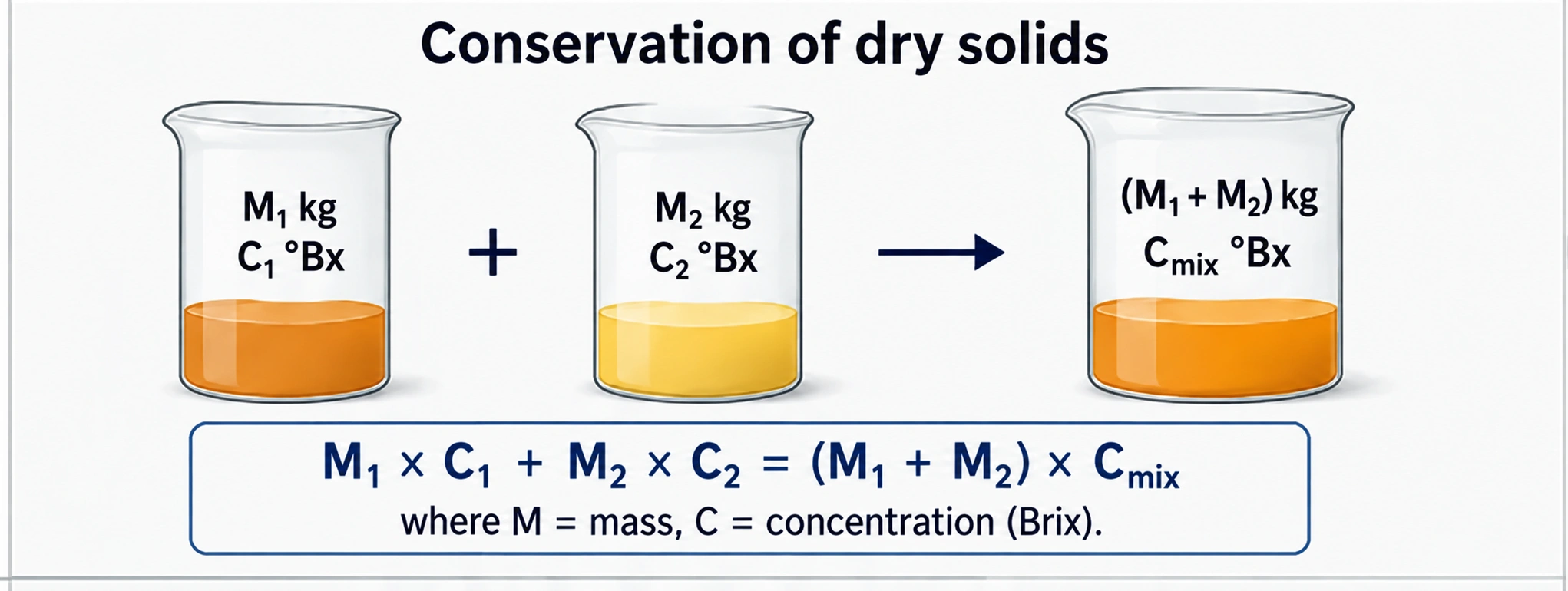
Fig. 4. The law of conservation of soluble solids
The basic principle of material balance is simple: the amount of soluble solids does not disappear when mixing. What goes in is what comes out. If you mix M₁ kg of liquid with concentration C₁ and M₂ kg with concentration C₂:
$$M_1 \times C_1 + M_2 \times C_2 = (M_1 + M_2) \times C_{\text{mixture}}$$
A universal formula for any operation — dilution, evaporation, blending.
Step 1. Calculate the concentration factor:
$$K = \frac{\text{Brix}_{\text{concentrate}}}{\text{Brix}_{\text{target}}}$$
*(For citrus fruits, the numerator uses Brix corrected for acid!)*
Step 2. The mass of finished juice from 1 kg of concentrate = 1 × K. The mass of water to add = K − 1.
Step 3. Convert to volume using the specific gravity from the IFU tables (International Federation of Fruit Juice Producers).
Example with lime concentrate:
True Brix with the acid correction = 53.52. The target value is 8.0°Bx.
$$K = \frac{53{,}52}{8{,}0} = 6{,}69$$
From 100 kg of concentrate → 669 kg of juice; you need to add 569 kg of water. At a specific gravity of the juice of 8.0°Bx (1.0318 kg/L) → 648 liters of finished product.
If the acid correction is ignored and you calculate from 47.0°Bx: K = 5.875, and only 487 kg of water will be added instead of 569 kg. The difference is 82 kg of water per every 100 kg of concentrate. At large volumes this is a direct loss on raw materials.
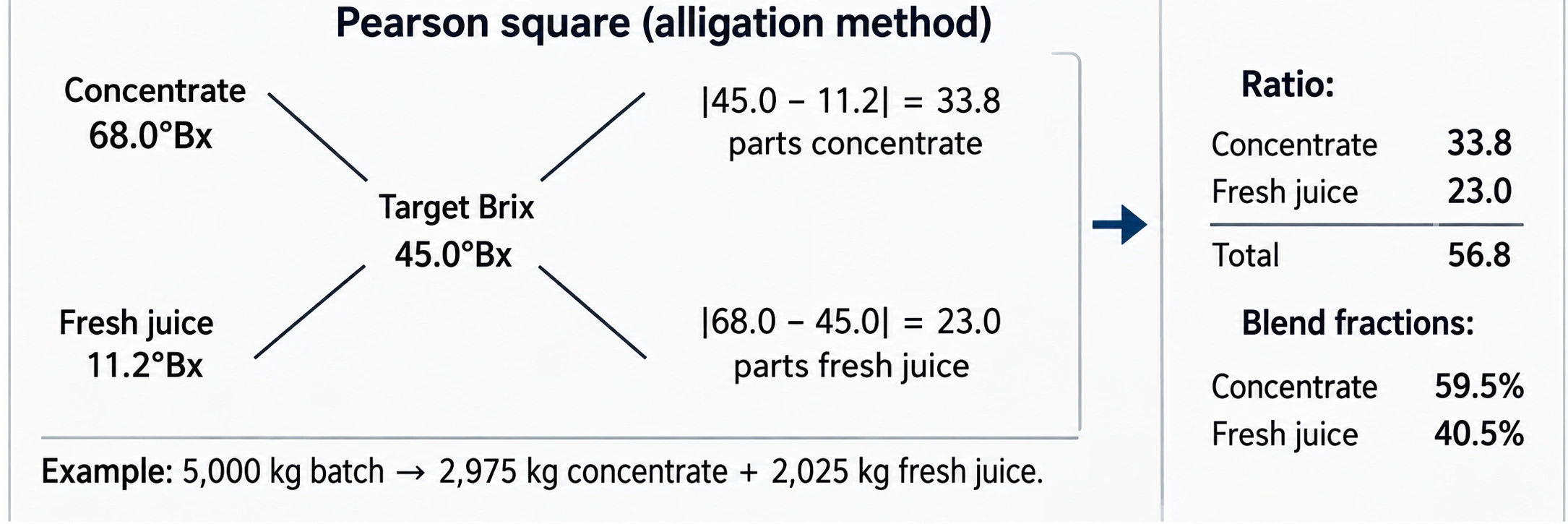
Fig. 5. Calculating a blend using the Pearson method
When you need to mix two components with different Brix to obtain an intermediate value, the Pearson method is used. It fits into a single step on a piece of paper.
Example: blend concentrate (68.0°Bx) with freshly squeezed not-from-concentrate juice (11.2°Bx) to obtain a semi-concentrate of 45.0°Bx.
| Component | Brix | Diagonal subtraction | Share in the blend | |||
|---|---|---|---|---|---|---|
| ↘ | Concentrate | 68.0 | \ | 45.0 − 11.2\ | = 33.8 | 33.8 / 56.8 = **59.5%** |
| Target | **45.0** | |||||
| ↗ | Fresh juice | 11.2 | \ | 68.0 − 45.0\ | = 23.0 | 23.0 / 56.8 = **40.5%** |
For a batch of 5 000 kg: 2 975 kg of concentrate + 2 025 kg of fresh juice.
This technique is called bringing the concentrate back: a heavily evaporated product can lose part of its volatile aroma compounds. To return them, the concentrate is diluted not with water but with freshly squeezed not-from-concentrate juice — and the aroma of the living fruit comes back.
The natural acidity of cherry is up to 3.0–3.5% for the most acidic industrial varieties. The pH ranges from 3.2 to 4.1. The red color is provided by anthocyanins — thermolabile pigments destroyed by heating. For storage and logistics the juice is concentrated to 68°Bx, resulting in a dark red viscous liquid.
Pasteurizing such a concentrate by the conventional method destroys anthocyanins and causes caramelization. Advanced producers use ohmic heating: an electric current is passed directly through the juice, heating it from within evenly and quickly. The electrical conductivity of the juice depends linearly on acidity, which allows precise control of the process. A temperature of 90°C is reached within seconds, color and polyphenols are preserved, and microbiological safety requirements are met.
The organoleptic problem remains even after proper processing. Reconstituted cherry juice (about 13.5°Bx) has a sugar-acid ratio below 5:1 — in its pure form such a product cannot be drunk. That is why cherry juice is almost always sent to the blending tank: it meets apple juice, receives neutral sweetness from it, and becomes a finished apple-cherry drink on the store shelf.
In the concentrated juice industry, Brix is not just a laboratory figure. This indicator links the physics of solutions, food legislation requirements, the flavor profile and the profitability of production.
One unaccounted degree on a line with a capacity of a thousand tons a month is hundreds of thousands of euros of difference in cost. An incorrectly applied acid correction means raw material overconsumption or non-conformance to the recipe. A misunderstood sugar-acid ratio means a claim from the customer.
That is precisely why professional suppliers and importers check with every batch not only Brix but also acidity, the flavor ratio, the origin of the raw material, the storage regime and the reconstitution parameters. That is the difference between "a drum with a number" and reliable raw material for production.
| Rule | Why it matters |
|---|---|
| Acid correction — always | Without it, raw material overconsumption on citrus can reach 15% or more |
| Wait 30–60 seconds before measuring a hot sample | ATC compensates for the instrument, not the sample |
| Filter a turbid sample before measuring | The Tyndall effect causes unpredictable failure |
| Monitor the ratio, not only Brix | Flavor is defined by balance, not by a single number |
| An in-line sensor is more reliable than a handheld refractometer | Continuous monitoring pays off faster than it seems |
An error of just 1°Bx when reconstituting concentrate can cost the plant tens of tons of raw material a month.
To quickly convert refractometer readings into real volumes of reconstituted juice — taking into account the acid correction and specific gravity — use our free Brix calculator. Enter the concentrate value, acidity and target, and get ready numbers for the water mass, product volume and concentration factor.
Contact our specialists to select the optimal raw material and receive technical support.
Contact us →ANIX
This article is not intended for detailed training. It only attempts to describe some technological terms, rules and not infrequent mistakes. And, of course, it shows the role and importance of the Technologist in production — a specialist able to take into account all the features of the equipment, raw materials and the finished product to ensure compliance with the law, the economics and the taste of the market. Our deep bow to the Technologist professionals.
A unit for measuring the weight concentration of soluble solids (sucrose) in an aqueous solution. 1°Bx equals 1 gram of sucrose in 100 grams of solution.
The total concentration of all non-volatile substances dissolved in water (sugars, acids, salts, vitamins, etc.) in a liquid product. Measured by the refractometric method.
An optical instrument for measuring the refractive index of light in liquid media. Used for the rapid determination of the content of soluble solids (Brix).
The most important indicator of flavor balance in juice products, calculated as the ratio of the corrected Brix value to the content of organic acids.
Optical scattering of light in colloidal or turbid media on suspended microparticles. In refractometry it blurs the light/shadow boundary, distorting readings.
An analytical method for measuring the ratio of stable carbon/oxygen isotopes. Used to detect adulteration of juices with extraneous sugars.
A pasteurization method in which an electric current is passed directly through an electrically conductive food liquid, providing instant and uniform heating.