The product is supplied in two types of containers:
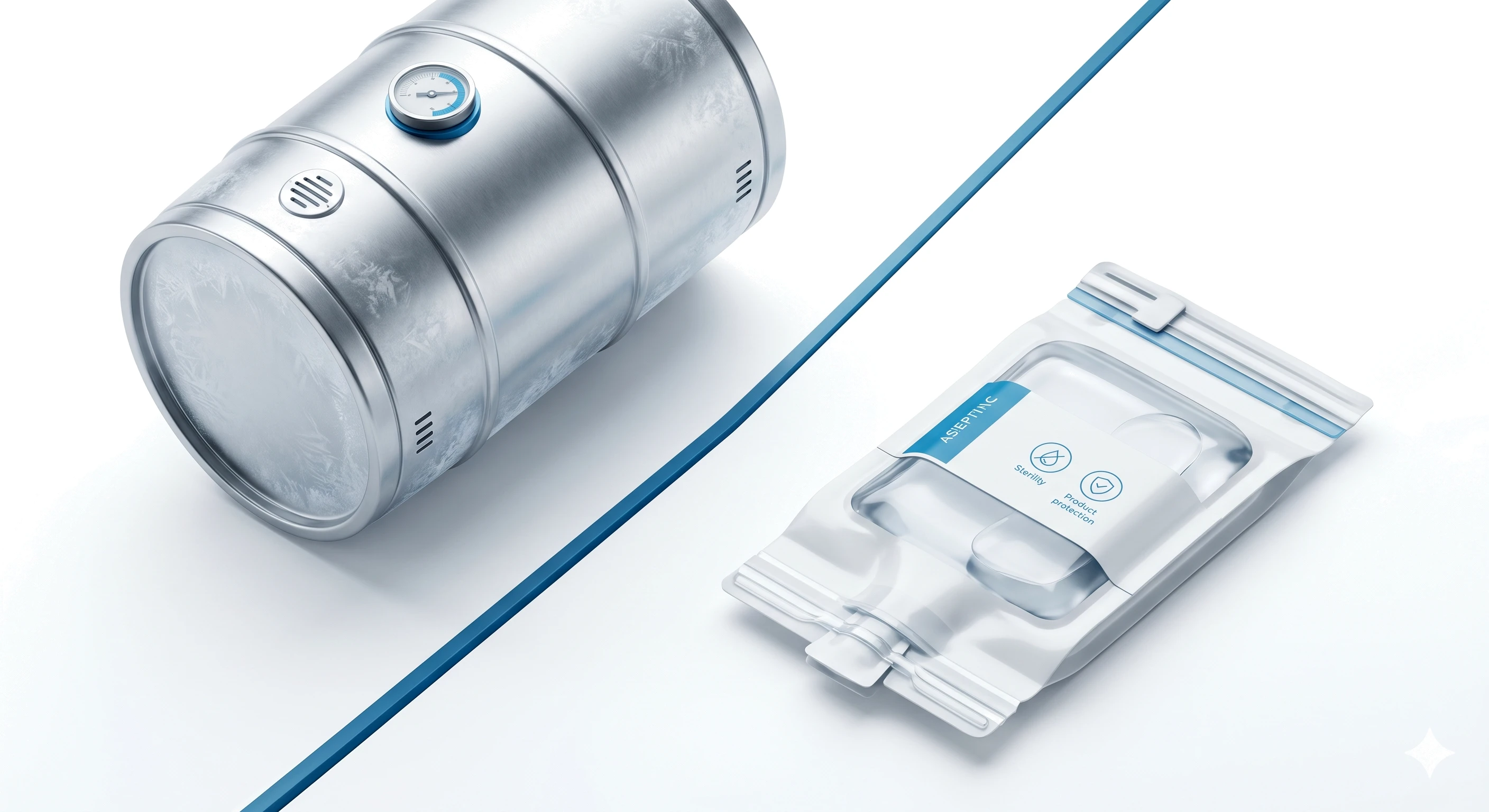
Aseptic packaging is a method of industrial preservation that ensures the sterility of the product without the use of preservatives.
| Storage temperature | Shelf life (with an undamaged liner) |
|---|---|
| +15°C... +20°C | 6 months from shipment or 12 months from the production date |
| +5°C... +12°C and below (down to 0°C) | Up to 18 months |

Important: It should be remembered that when an aseptic package is opened, the product's seal is broken and, accordingly, it is seeded with bacteria (primarily mould and yeast) present in the air. After opening, there is no longer any difference between the initial preservation of the product, freezing or aseptics — the product requires immediate use or special storage conditions.
For frozen products, a special ultra-durable polyethylene liner in a 200-litre metal drum is used.
| Temperature | Maximum shelf life |
|---|---|
| -18°C | 24 months (point of biological activity arrest) |
| -10°C | 12 months |
| -1°C... -4°C | 1-2 months |
| +5°C | 1 week |
| +15°C... +20°C | 2-3 days (thawing process) |
| In a blending tank | 6 hours |
The temperature of -18°C is recommended for storage as the temperature of biological activity arrest. A product with a broken industrial package can be stored at -18°C in the same way as recommended for a frozen product. At the same time, contact of the product with the external environment should be limited as much as possible to protect it from oxidation.
Limitation of shelf life at -18°C by some manufacturers is caused primarily not by microbiology issues but by concerns about changes in the colour or cloudiness of the product. This is most likely for the following groups:
The storage conditions stated here are not exclusive and serve only as general recommendations. They may differ for different manufacturers and different products. As a rule, exact production dates and the recommended shelf life are indicated on each unit of packaging.