In international sea transportation of concentrated juices, the most important factor is the ratio of cargo volume and weight. Concentrated juice is a very dense and heavy product (the density of apple concentrate is about 1.35 g/cm³). Because of this, the container's payload capacity is reached much earlier than its internal volume is filled.
That is why the main transport module for juices in drums is the 20-foot standard container (20" Dry Van). The use of 40-foot containers for drums is impractical, since the container would be half empty by volume due to exceeding the maximum permissible weight.
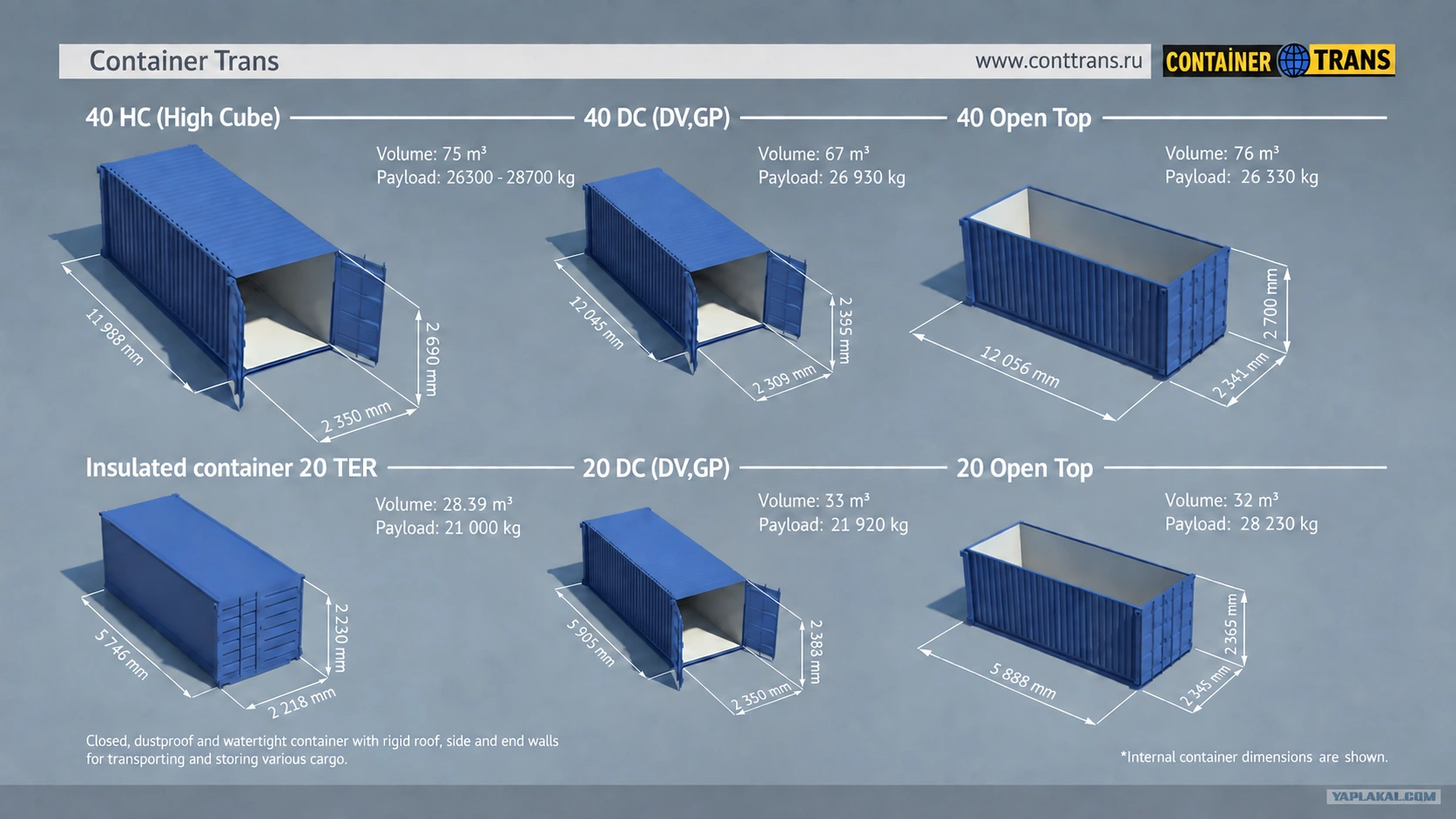
These parameters are averaged standards (ISO). Exact values may vary by millimetres depending on the container manufacturer, but they are always within the tolerances to ensure compatibility with port equipment.
| Parameter | Value |
|---|---|
| Internal length | 5 898 mm |
| Internal width | 2 352 mm |
| Internal height | 2 393 mm |
| Door opening width | 2 340 mm |
| Door opening height | 2 280 mm |
| Internal volume (cubic capacity) | 33.2 m³ |
| Empty container weight (tare) | 2 080 - 2 200 kg |
| Maximum payload | 21 700 - 28 200 kg |
| Maximum gross weight | 24 000 - 30 480 kg |
A standard load for such a container is 80 steel drums on 20 pallets. The total gross cargo weight is then about 22-23 tonnes, which optimally fits within the weight limits of both sea lines and road transport for subsequent door-to-door delivery.